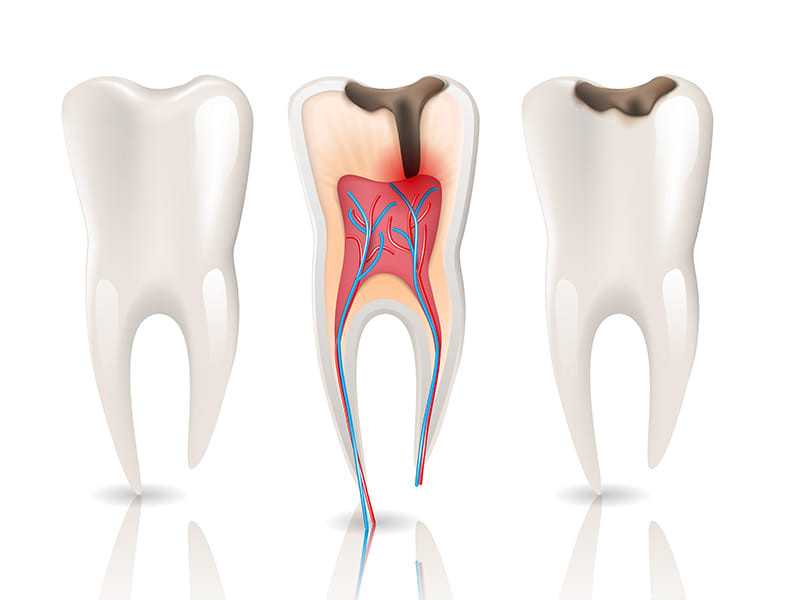
Impacted teeth are the teeth that do not take place in the tooth row and remain under the mucosa or bone even though it is time to erupt. Impacted teeth may tend to erupt in later periods due to the pressure caused by the patient’s use of dentures.
Wisdom teeth are the last adult teeth to complete their formation.
Wisdom teeth consist of a total of four teeth, two on the bottom and two on the top.
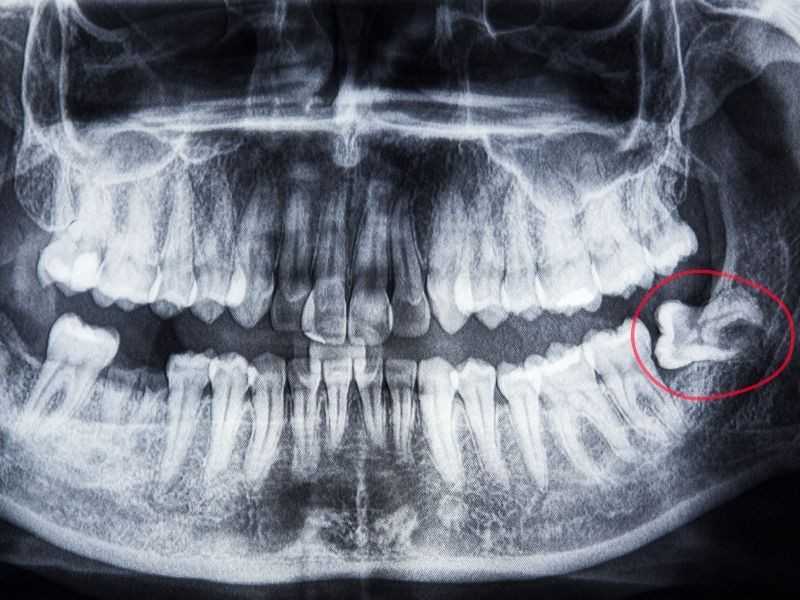
Some wisdom teeth can form almost like a normal tooth, while others are impacted. Impacted wisdom teeth can decay the teeth next to them and cause other problems. It would be wrong to say that all
impacted wisdom teeth will have the same symptoms. In some cases, impacted wisdom teeth do not make themselves felt at all. However, it should not be forgotten that since it is not easy to maintain the hygiene of impacted wisdom teeth, it is highly likely to cause decay and gum diseases.
Impacted tooth operations are performed after a detailed examination by a dentist in Fethiye.

Why Wisdom Teeth Remain Impacted?
There may be many reasons why
wisdom teeth remain impacted. These reasons are as follows:
- Thickening of the mucosa on the tooth as a result of long-term dental inflammation
- As a result of pressure from nearby teeth
- The bone is quite dense
- Abnormal positioning
- Narrow space in the jaw
- The presence of excess teeth or cystic formations near permanent teeth
- Infection in the jawbone
- Milk teeth being in the mouth for longer than normal
- Milk teeth erupt earlier than they should
What are the Symptoms of Impacted Wisdom Teeth?
Not every impacted wisdom tooth gives symptoms. Symptoms can be encountered when the impacted tooth becomes
infected, starts to damage the teeth next to it or causes other dental problems.
Symptoms of impacted wisdom teeth are as follows:
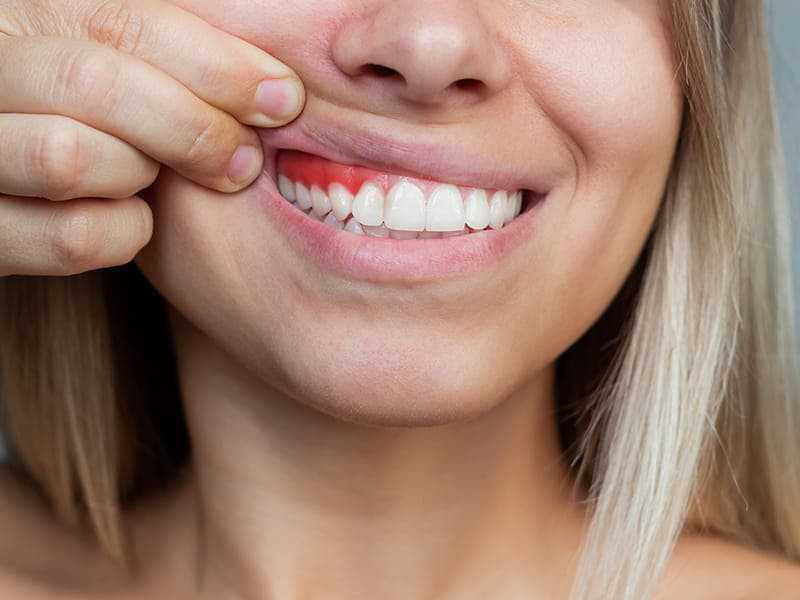
- Red or swollen gums
- Bleeding gums
- Jaw pain
- Difficulty opening the mouth
- Unpleasant odor and taste in the mouth
- Swelling-like formations around the mouth and jaw
Wisdom teeth may be impacted in some cases.
Impacted teeth are extracted in the following cases:
- Impacted teeth that damage neighboring teeth
- Impacted teeth that pose a risk of infection
- Teeth that prevent orthodontic treatment
- Impacted teeth forming a focal focus of infection
- Impacted teeth causing pain of unknown origin
- Teeth that cause restricted mouth opening
- Impacted teeth in the fracture line
Impacted wisdom tooth surgery should be performed in a full-fledged clinic. When the procedure is performed by a specialist and experienced dentist, it is performed with minimal pain and risk. After the procedure, the patient can return home on the same day.
Before the extraction of impacted wisdom teeth,
local anesthesia is usually applied to the area to be treated. Since the procedure is performed under local anesthesia, the patient remains awake. However, depending on the patient and the patient’s condition, the anesthesia method to be applied during tooth extraction varies. In addition to local anesthesia, sedation anesthesia or general anesthesia can also be applied.
Fethiye impacted wisdom tooth extraction takes place as follows respectively:
- An incision is made in the relevant area so that the tooth and bone in the area to be extracted are prominent.
- The bone that prevents access to the root of the tooth is cleaned.
- Meanwhile, the position and structure of the tooth is evaluated by the dentist. As a result, if it is a healthier method to extract the tooth by cutting it into pieces, the tooth is cut into small pieces and removed.
- Thus, the impacted wisdom tooth is removed.
- The area where the extracted impacted wisdom tooth is located is cleaned.
- If necessary, stitches are applied to the extraction area.
- Gauze is applied to the relevant area for the period determined by the doctor to stop bleeding and support the formation of a blood clot.


Following the doctor’s instructions after
impacted wisdom tooth extraction is very important for a healthy healing process.
The things to be considered after impacted wisdom tooth extraction are as follows:
- It is quite normal to see blood in the extraction area after tooth extraction. The patient does not need to worry, but there is a point to pay attention to. Clot formation is very important for the healthy filling of the cavity in the extraction area. In order for the clot to form, the patient should not spit out the blood in his/her mouth.
- After the anesthesia effect wears off, it is normal to experience pain or soreness in the area where the impacted wisdom tooth extraction was performed. In this case, the painkiller prescribed by the doctor should be used.
- Heavy exercise and sports should be avoided after impacted wisdom tooth surgery. The patient should rest for the rest of the day after tooth extraction.
- Smoking, alcohol, very cold or hot drinks should be avoided after the surgery.
- Teeth should not be brushed for the time recommended by the doctor. This is because the blood clot may break down.
- Care should be taken to eat soft-textured meals within 24 hours after the extraction. Hard foods should be avoided.
- If stitches have been applied, the doctor will tell you how long the stitches should be removed. Sometimes self-dissolving stitches can be used and sometimes no stitches are used.