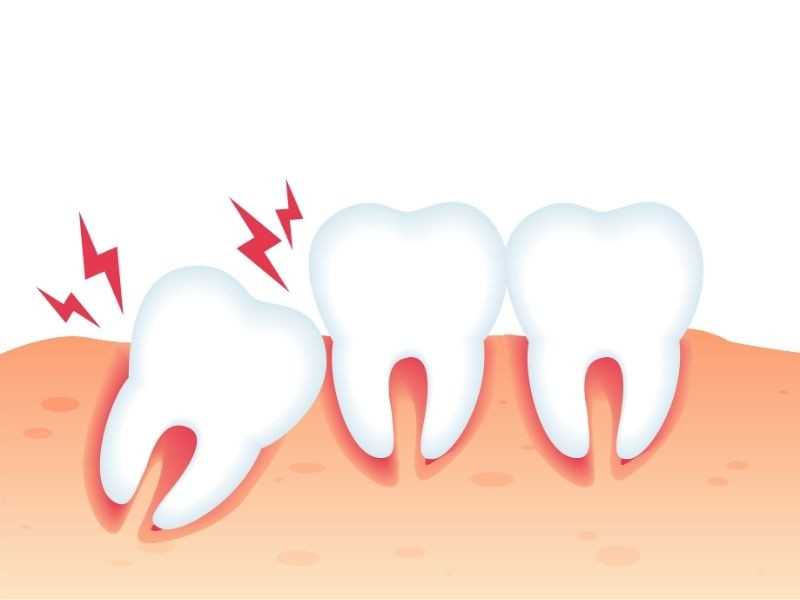
An impacted tooth refers to teeth that remain within the jawbone. When teeth fail to emerge despite reaching their emergence time, it’s called an impacted tooth. All impacted teeth may remain within the jawbone, or some parts may emerge to the surface. When part of it emerges to the surface, it’s called a partially impacted tooth.
Symptoms of Impacted Teeth
An impacted tooth can affect the person’s entire dental structure.
Symptoms of impacted teeth can be listed as follows:
- Tooth pain
- Gum pain
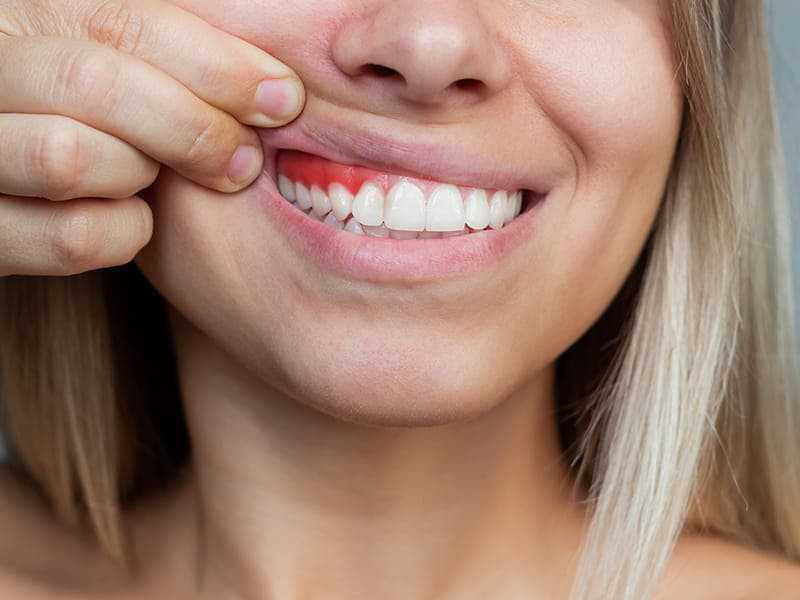
- Gum swelling
- Pain radiating to the ear and jaw
- Swelling in lymph nodes
- Redness of the gums
What Causes Impacted Teeth?
Tooth impaction can occur due to many reasons. One of the factors in tooth impaction is genetic factors. Impacted teeth can also occur due to jaw narrowness. Due to the person’s narrow jaw structure, there may not be space for the tooth to emerge. Therefore, it may remain impacted. Additionally, infection can form underneath due to
decay of baby teeth and lack of treatment. This infection sets the stage for tooth impaction.
Which Teeth Become Impacted?
As a result of tooth impaction, the person may experience tooth pain or irregularity in their teeth. The most commonly
impacted teeth can be listed as: 3rd molars in upper and lower jaw, canine teeth, and premolars. Additionally, some people have been observed to have impacted front and lateral incisor teeth. The reason some teeth become impacted is their reverse eruption. Another reason for impacted teeth can be given as insufficient space.

Risks of Impacted Teeth
Impacted teeth create many risks for a person’s dental health. To protect against these risks, immediate intervention should be made and the tooth should be treated. In cases where impacted teeth are not treated, the tooth can cause infection. It can cause structural disorders by applying pressure to the tooth root or adjacent tooth. Fluid can fill around the impacted tooth, and when this fluid sac starts to grow, a cystic condition can occur. This cystic condition can cause excessive damage to teeth. As the cyst grows, it can damage adjacent teeth, surrounding bone, and nerve tissue. These conditions can cause severe pain and treatment may become difficult. Also, because the tooth is impacted, food can accumulate in that space. If food cannot be cleaned, decay may occur in surrounding teeth.
Impacted Tooth Treatment
Impacted tooth treatment occurs in the form of extracting the impacted tooth. One shouldn’t wait until the impacted tooth causes pain to have it extracted. As age progresses, tooth extraction may be more challenging as the tooth roots will develop more. Therefore, one shouldn’t wait until the tooth causes pain. The earlier the impacted tooth is extracted, the less likely other teeth are to be damaged. Impacted teeth can be removed through surgery.
Before impacted tooth surgery, the position of the tooth while impacted is examined. The doctor needs to be informed about previous surgeries and existing diseases. After examining the tooth’s position, root formation is also checked and how the procedure will be performed is decided. Depending on the tooth’s condition, while the tooth can be removed in one piece, it can also be removed by separating the roots. In
impacted tooth surgery, local anesthesia, general anesthesia, or sedation is applied. Which anesthesia will be applied is decided based on the person’s structure and tooth condition.
After Impacted Tooth Treatment
After impacted tooth treatment, pain with swelling may be felt around the treated tooth. Medication can be used for pain. Medications recommended by the doctor can be used. After the procedure, very hot or very cold foods and drinks should be avoided. This is because the extraction site becomes sensitive after the procedure. This is for a short time. However, during this short period, soft-textured foods should be consumed instead of hard foods. Paying attention to oral hygiene is also important. A soft toothbrush should be preferred. Brushing should be done without applying pressure to the treated area. Mouthwash can also be used. Medications given by the doctor should be used regularly during this process. Since there are stitches at the extraction site, these stitches need to be removed. Stitches are removed within 7-10 days. However, some doctors use dissolving stitches, so there may be no need to have the stitches removed.
Impacted Tooth Extraction Price
Impacted tooth extraction varies depending on the position and structure of the tooth.
Dentist Funda Erciyas performs impacted tooth extraction, and to get in touch, you can create a request from our website’s appointment request section or reach us via WhatsApp.